Kōtuku / White Heron Collection
“He kotuku rerenga tahi” – “a white heron’s flight is seen but once.”
This whakatauki, or proverb, is used to indicate a very special, rare event and is also applied to visitors of importance. The kōtuku is common in Australia, the South Pacific and Asia.
In New Zealand, the Kōtuku only breeds in the colony in the Waitangiroto Nature Reserve. near Whataroa, South Westland, between September and February. The species was almost exterminated to meet demand for the ornamental feathers it displays during breeding. The breeding site on the Waitangiroto River was discovered in 1865. By 1941, there were only four nests. At this time, the Waitangiroto site was declared a reserve and wildlife refuge and patrolled at breeding time. These images were taken in December 2024, when there were 59 nests.
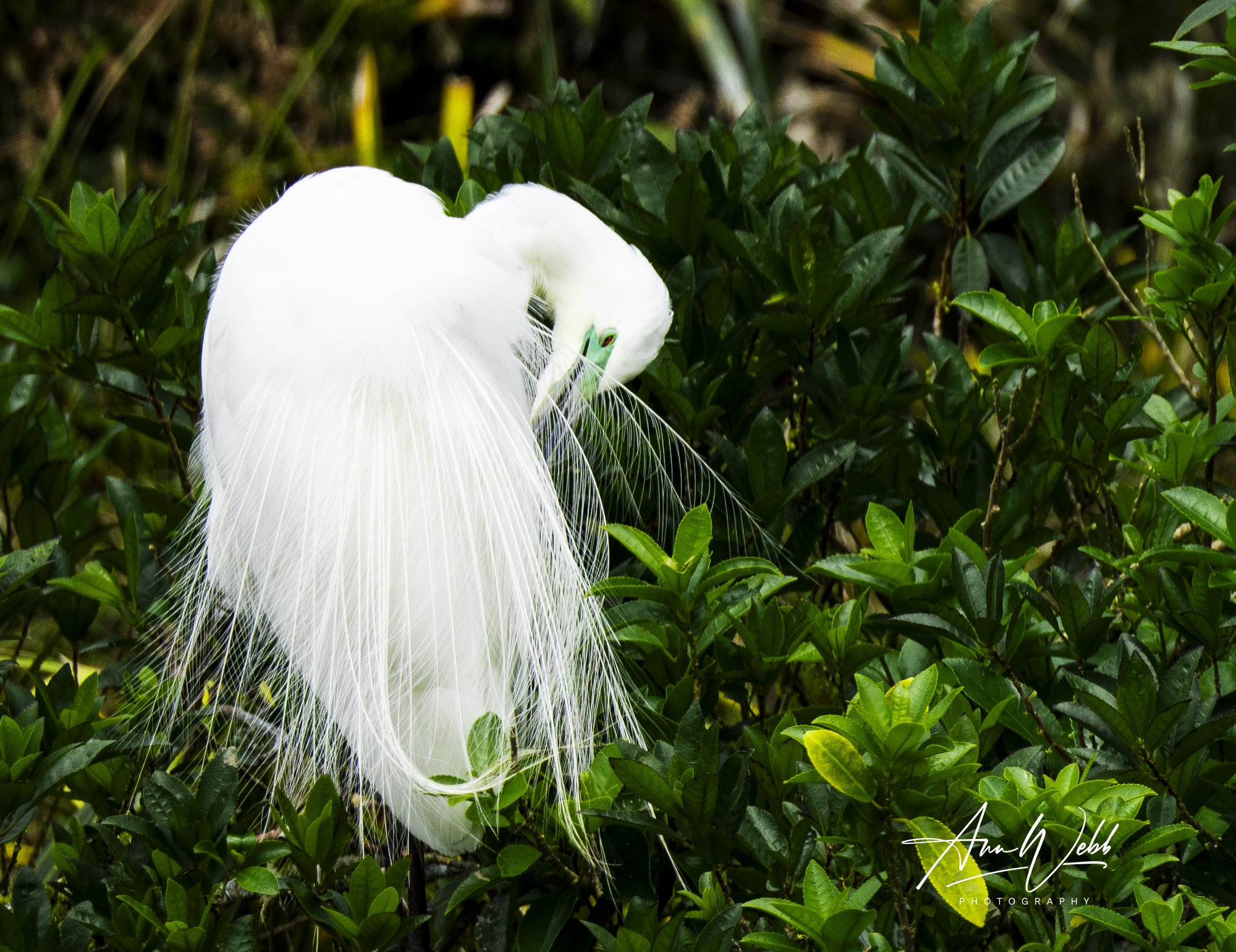
A beautiful shot of a Kōtuku (White Heron) preening, showcasing its elegant feathers and striking beak coloring that changes from yellow to blue-green during breeding season.

Kōtuku feed in the Ōkārito Lagoon near their breeding colony on the West Coast, NZ.

A captivating moment of a Kōtuku (White Heron) feeding its young, captured by Ann Webb Photography

A stunning shot of the Kōtuku (White Heron) perched amidst lush greenery at the Whataroa Breeding Colony in New Zealand, captured by Ann Webb Photography

A powerful moment of a Kōtuku (White Heron) guarding its young chicks and ruffling its beautiful breeding plumage.

Capture the elegance of the Kōtuku (White Heron) wading through the shallow waters in this stunning photo by Ann Webb Photography

The chicks are eagerly waiting for the food the parent has brought. The adult male and female Kōtuku look the same so this could be either parent.